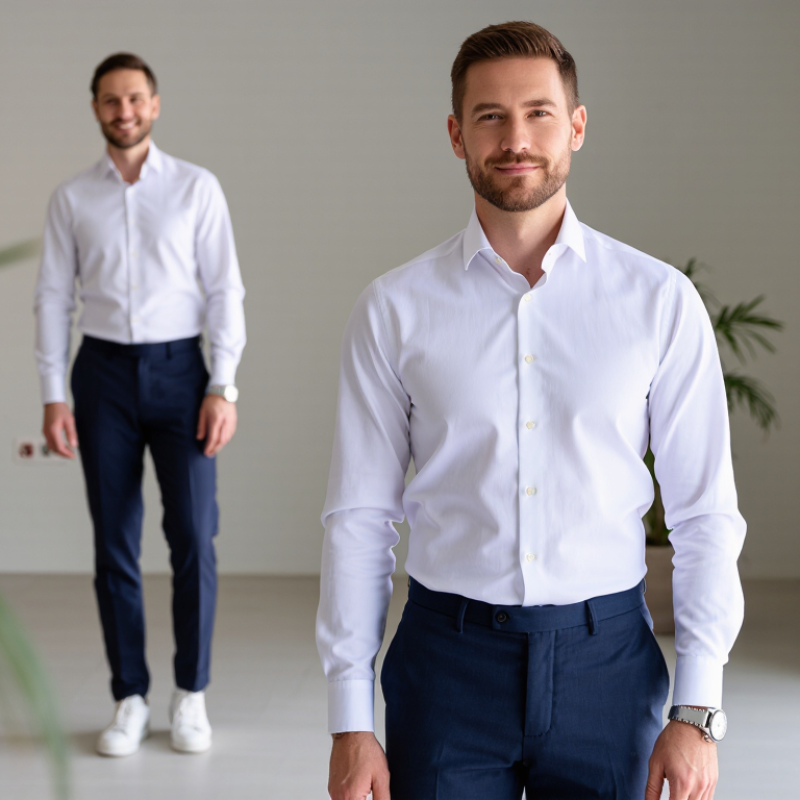
What makes a man look more stylish is rarely a designer label or an expensive wardrobe. It is the visible result of fit, proportion, grooming, fabric, and confident restraint. A clean white shirt with sleeves ending near the wrist can look sharper than a crowded outfit covered in logos. Small choices matter.
Industry research supports this practical view. The State of Fashion 2024 report from The Business of Fashion and McKinsey & Company describes a cautious fashion market shaped by value-conscious consumers. That shift makes versatility and product quality more important than constant buying. Euromonitor International also identifies personalization, durability, and conscious consumption as continuing influences on apparel decisions. Style, therefore, is not simply about following trends. It is about selecting clothing that suits a man’s body, lifestyle, climate, and daily responsibilities.
Fit comes first. Always.
This guide explores how to make a man look more stylish through measurable, realistic improvements. We will examine shoulder lines, trouser breaks, color coordination, footwear, accessories, and personal maintenance. The advice focuses on repeatable habits rather than unrealistic transformations. A navy overshirt, straight-leg trousers, clean leather sneakers, and a properly fitted watch can create a strong foundation. However, style is personal, and no formula works perfectly for everyone. Even professional recommendations need reflection. A supposedly “classic” item may feel uncomfortable, age poorly, or conflict with someone’s culture and routine. The goal is not perfection. It is a more intentional appearance, built through observation, adjustment, and better choices.
How to Make a Man Look More Stylish?
Measure Body Proportions with ISO 8559-1 Sizing Data
Style improves when clothing follows the body instead of fighting it. ISO 8559-1 offers standardized definitions for body measurements and measurement landmarks. It does not prescribe a perfect male shape or dictate personal taste.
Measure height, chest, waist, hip, shoulder-related landmarks, and inseam with a relaxed posture. Keep the tape level and close to the body. Do not pull it tight. A tight tape can make a jacket or trouser pattern seem smaller than needed. Record each measurement in centimeters. Small differences matter.
Use the results to judge proportion. A longer torso may benefit from a slightly higher trouser rise. Shorter legs can look balanced with a clean trouser break. Broad shoulders may need enough chest ease without adding unnecessary fabric at the waist. Sleeve length should reveal a narrow strip of shirt cuff.
My early mistake was treating one number as the answer. It was not. Body posture, muscle distribution, and comfort changed the result. Measurements should guide fitting, not replace it. A second check after sitting can expose pressure around the waist or thighs. Clothing should look intentional while allowing ordinary movement. Perfect symmetry is unrealistic. Good proportion is more useful.
ISO 8559-1 provides definitions and procedures for taking apparel-related body measurements; it does not prescribe a universal set of clothing sizes. The example measurements below describe one hypothetical adult and are for illustration only. Take measurements using the relevant standard’s guidance and compare them with a garment’s own size chart.
| Body measurement | Example | How it informs fit | Practical style consideration |
|---|---|---|---|
| Stature | 178 cm | Helps assess garment length and overall proportions. | Check jacket and trouser lengths against your proportions rather than relying on height alone. |
| Neck girth | 39 cm | Useful for assessing the fit of a collared shirt. | Fasten the top button when checking comfort; the collar should not feel restrictive. |
| Chest girth | 100 cm | Guides fit across the chest and upper torso. | Choose a jacket that closes without pulling across the chest, while allowing comfortable movement. |
| Waist girth | 84 cm | Helps assess shirt, jacket, and trouser fit around the waist. | A clean waist fit can look polished; avoid garments that strain or bunch when fastened. |
| Hip girth | 98 cm | Helps determine room through the seat and lower body. | Check that trousers sit smoothly and allow sitting and walking without pulling. |
| Shoulder breadth | 46 cm | Helps assess the placement of shoulder seams in shirts and jackets. | Look for shoulder seams that sit close to the natural shoulder edge, subject to the garment’s intended cut. |
| Arm length | 62 cm | Supports sleeve-length assessment. | Check sleeve length with arms relaxed; shirt cuffs and jacket sleeves should suit the chosen layering and style. |
| Inside leg length | 82 cm | Helps assess trouser length and leg proportions. | Choose the hem break you prefer, then have trousers adjusted if needed. |
Aim for about 1–2 inches of extra chest room. It should skim your body, not cling. Treat this as a starting point.
Button it fully and stand naturally. Reach forward as if picking up a cup. The buttons should stay flat without sharp pulling lines.
Side seams should hang fairly straight. If they twist toward your front or back, the cut may not suit your shape.
Maybe. Compare two nearby sizes while reaching, sitting, and walking. A larger size can help, but excess fabric may look untidy.
Use three colors or fewer. Let one color dominate, add a secondary shade, and keep the accent small.
Try a belt, watch strap, socks, or pocket square. Keep the detail modest. Too much contrast can make the outfit feel noisy.
Choose an unstructured navy jacket, white shirt, charcoal trousers, dark straight-leg jeans, and simple leather shoes. These pieces suit work, travel, dinners, and relaxed weekends.
Wear each piece for several movements. Sit, walk, and reach forward. A shirt may look elegant but feel stiff after six hours. I still misjudge proportions sometimes.
Looking polished starts with understanding your proportions and choosing clothing that supports your natural shape. Use ISO 8559-1 sizing data as a practical reference for measuring the chest, waist, shoulders, and inseam, then compare those measurements with garment size charts. A well-fitting shirt should allow roughly 1–2 inches of ease around the chest, giving you room to move without creating a loose or untidy appearance. These details help answer the question of what makes a man look more stylish: balanced proportions, clean lines, and comfortable confidence.
For everyday outfits, apply the professional three-color rule by combining one main color with two complementary shades. Keep leather accessories coordinated by matching the belt and shoes in color and overall formality. Finally, create a five-piece capsule wardrobe built around versatile essentials, such as a well-fitted shirt, tailored trousers, a smart jacket, quality knitwear, and adaptable footwear. With thoughtful coordination, a small wardrobe can produce many refined looks for work, social occasions, and relaxed settings.

 CLStyle Fashion