Summer dressing for men is less about owning more clothes and more about choosing breathable, reliable pieces. The right outfit should handle heat, movement, and unexpected social plans without looking careless. Linen shirts, cotton trousers, leather sandals, and unstructured jackets create a practical foundation. Still, fabric alone cannot rescue poor fit.
Tom Ford, a leading menswear designer, once said, “Dressing well is a form of good manners.” That idea matters during hot weather. A clean collar, polished shoes, and trousers that break neatly show consideration without appearing overdressed. For anyone learning how to dress for summer men, this guide focuses on useful decisions rather than rigid fashion rules. It considers color, texture, proportion, and comfort in real situations.
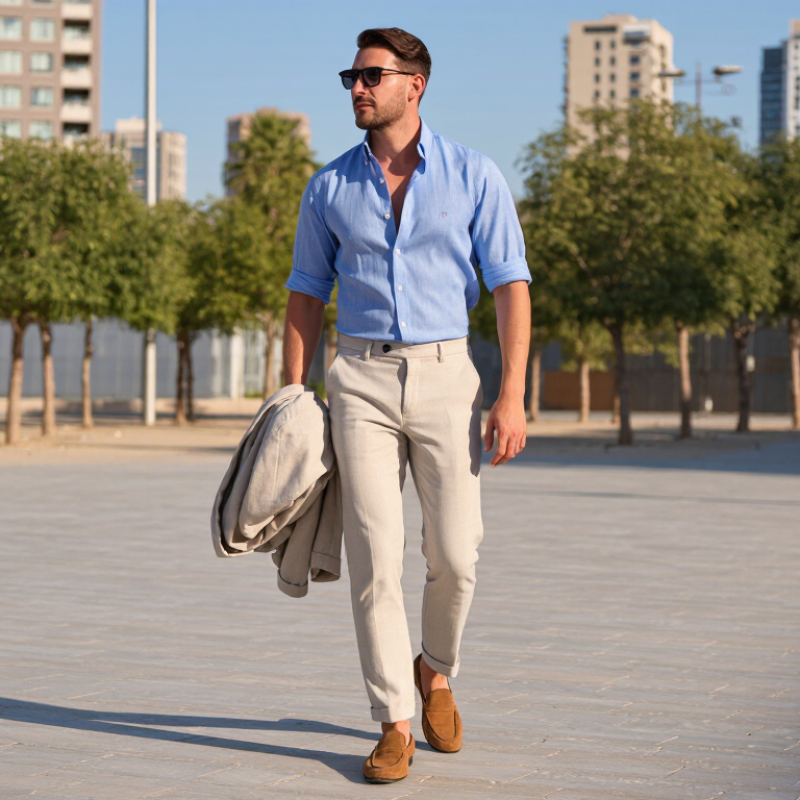
Picture a pale blue Oxford shirt, sleeves rolled twice, with stone chinos and suede loafers. Add sunglasses with simple frames. The result feels relaxed, but intentional. Navy, cream, olive, and light grey also work well because they reflect summer light without becoming loud. Avoid heavy synthetic fabrics when possible. They can trap heat and create visible discomfort.
There is no perfect summer formula. A linen shirt wrinkles. White sneakers lose their freshness. Even experienced dressers sometimes choose style over comfort and regret it by noon. That mistake is useful. Clothing should support your day, not compete with it. This guide explores adaptable combinations for offices, weekends, dates, and outdoor gatherings, helping you dress with confidence while remaining cool, natural, and appropriately polished.
Understanding Summer Fabrics, Colors, and Clothing Priorities
Summer dressing starts with fabric, not decoration. In my experience, lightweight cotton, linen, and linen blends keep air moving around the skin. Cotton feels familiar, but it can hold sweat after a long walk. Linen dries faster and develops natural wrinkles, which some men may dislike. That wrinkle is not always a flaw. Choose a loose weave, breathable lining, and enough room across the chest and thighs. A shirt that clings at noon has already failed. Follow the care label, because poor washing can ruin breathable fabric.
Color affects comfort and appearance. Pale blue, sand, cream, sage, and soft gray reflect more sunlight than deep black. Darker shades still work for evening meals or shaded streets. I often build an outfit around one light neutral, then add one muted color. This keeps the look calm without becoming dull. Strong contrast can look sharp, yet it may draw attention to sweat marks. Test colors outdoors, not only under store lighting. My own beige choices once looked washed out in bright sun.
Clothing priorities should follow the day’s demands. Start with a breathable shirt, then choose shorts or trousers that allow a full stride. Secure pockets matter when carrying keys, a phone, or a small wallet. Footwear should dry reasonably quickly and support the heel. A thin overshirt helps in air-conditioned rooms and offers sun coverage outside. Fit remains more important than a short-lived trend. Check the collar, waistband, and seams before leaving home. I sometimes choose style over ventilation and regret it by lunchtime. Comfort is evidence.
How to Dress for Summer: Men's Outfit Guide
Summer fabrics balance breathability, moisture management, and drying speed. The chart compares typical moisture regain values, a standard textile measure of how much moisture a fiber can absorb relative to its dry weight.
Style priority: Choose linen or cotton for a breathable, relaxed feel; choose polyester when quick drying is most important. Light colors can also reduce heat absorption in direct sunlight.
Selecting Lightweight Trousers, Shorts, and Everyday Bottoms
How to Dress for Summer: Men’s Summer Outfit Guide
Summer dressing for men often starts below the waist. Lightweight trousers keep your outfit polished without trapping heat. Choose breathable cotton, linen blends, or lightweight wool with a loose but controlled fit. Neutral shades such as stone, olive, and navy work well with simple shirts. Check the fabric in daylight before buying. Thin material can become transparent, and that mistake is easy to miss indoors.
Shorts suit relaxed days, but length matters. A hem that sits above the knee usually looks balanced and allows comfortable movement. Flat-front styles create a cleaner shape, while drawstring waists feel better during travel or long walks. For everyday bottoms, cotton chinos and tailored fatigue trousers offer useful flexibility. They can handle a café visit, a warm commute, or an informal dinner. I sometimes choose comfort over structure, and the outfit looks less sharp than planned. That trade-off is worth noticing.
Tips: Match the trouser weight to the weather. Roll linen trousers once, not repeatedly, to avoid bulky cuffs. Test pockets while sitting; tight openings quickly become annoying. Wear shorts with a shirt that has some structure, so the outfit does not look accidental. Wash summer bottoms gently and let them air-dry. Heat, sweat, and frequent washing can weaken delicate fibers. Feedback from real wear matters more than a perfect fitting-room mirror.
Matching Summer Shoes, Accessories, and Practical Details
Summer dressing works best when shoes, accessories, and practical details feel connected. Start with lightweight trousers or tailored shorts, then choose shoes that match their level of formality. Clean leather sandals suit relaxed evenings, while breathable canvas sneakers work well for walking and casual lunches. Loafers can sharpen an outfit, but thin socks or no-show socks prevent a heavy look. Keep the colors related, not identical. A warm brown belt can quietly support tan shoes, while a simple watch adds structure without looking forced.
Tips: Test the full outfit before leaving home. Walk, sit, and check the fit.
Accessories should solve problems, not create them. A woven belt adds texture and helps shorts stay secure. Sunglasses should sit comfortably on your nose without constant adjustment. Choose a compact crossbody bag for a phone, wallet, and keys, especially during city walks. A cotton or linen cap can protect your face, though it may look too casual with dressier shoes. I prefer one noticeable accessory and keep the rest quiet. Too many details can make summer clothing feel crowded.
Practical comfort matters in real heat. Choose moisture-resistant socks, breathable insoles, and fabrics that dry quickly after unexpected rain. Light colors stay cooler, but they can show food and dust easily. I still get this wrong sometimes. Carry a small cloth and avoid wearing delicate trousers on long travel days. Roll sleeves neatly, leave enough room at the collar, and check shoe grip before walking on wet pavement. Style matters, but comfort decides whether the outfit survives the day.
Building Complete Outfits for Casual, Smart, and Formal Occasions
Summer dressing works best when the outfit matches the occasion, not just the temperature. In fitting rooms, I have found that breathable fabric helps, but correct fit matters more. Keep it breathable. For casual days, wear a lightweight cotton shirt with tailored shorts or relaxed trousers. Choose clean sneakers or simple leather sandals. A pale shirt, dark shorts, and a woven belt create useful contrast without looking forced. Leave one button open, but avoid excessive looseness.
Smart summer outfits need sharper structure. Try a knitted polo with pressed chinos and suede loafers. Neutral colors make coordination easier, while one muted accent adds personality. Roll your sleeves evenly and keep your trousers lightly tapered. Fit matters most. I sometimes choose linen because it feels excellent, then regret it after several hours of visible creasing. A cotton-linen blend may offer a more reliable balance for work dinners or outdoor meetings.
Formal occasions require restraint and careful fabric selection. Choose an unlined lightweight wool jacket, a crisp dress shirt, and matching tailored trousers. Dark brown or black leather shoes usually look appropriate, especially with a simple belt. Keep patterns quiet and accessories limited. A white pocket square can add polish without competing with the outfit. Details carry weight. Check the jacket shoulders, trouser break, and shirt collar before leaving, because summer light reveals poor proportions quickly. Avoid heavy layers, shiny synthetic fabrics, and overly casual footwear when the invitation expects formal dress.
Conclusion
Learning how to dress for summer men starts with choosing comfort, breathability, and versatility. Lightweight fabrics such as linen, cotton, and moisture-managing blends help keep you cool, while light or muted colors reflect heat and create a fresh seasonal appearance. Choose breathable shirts, relaxed tops, and well-fitted trousers or shorts that allow easy movement without looking untidy. The best summer wardrobe balances airflow with structure, making each piece practical for warm weather.
Complete your look with breathable shoes, simple accessories, and useful details such as sunglasses, belts, and lightweight layers for cooler evenings. Casual outfits can combine a relaxed shirt with shorts and comfortable footwear, while smart occasions call for tailored trousers, a polished top, and coordinated accessories. For formal settings, select lightweight tailoring in a refined color and pair it with a neat shirt and suitable dress shoes. With thoughtful combinations, how to dress for summer men becomes a simple guide to looking confident, comfortable, and appropriately dressed for every occasion.
 CLStyle Fashion
