Menswear moves quickly now. A jacket can look current in a Monday street-style photo and dated by the next season. But the change is not just about fleeting trends. To understand why is men’s fashion changing so fast, look at how social platforms, online shopping, resale, and shifting ideas of personal style reinforce one another.
The McKinsey and Business of Fashion State of Fashion 2025 report described a challenging industry outlook, with low single-digit growth expected for the global fashion market. That pressure can encourage brands to release sharper, more frequent stories around products. Meanwhile, ThredUp’s 2025 Resale Report estimated that the global secondhand apparel market could reach $367 billion by 2029. Resale gives shoppers more ways to experiment, from vintage workwear to last season’s trainers, without buying every item new. These figures describe fashion broadly, not men’s clothing alone, so they should not be treated as proof that every menswear trend is accelerating.
There is another force: visibility. A creator’s outfit, a celebrity airport look, or a new silhouette can circulate widely before traditional magazines publish a seasonal guide. That creates speed, but not always lasting change. Some men adopt a look; others ignore it completely. That matters. Fashion writers can mistake online attention for everyday behavior, and I would be cautious about claiming one cause explains everything. In this guide, we will separate measurable market shifts from viral noise and examine how shopping habits, culture, and design shape modern menswear.
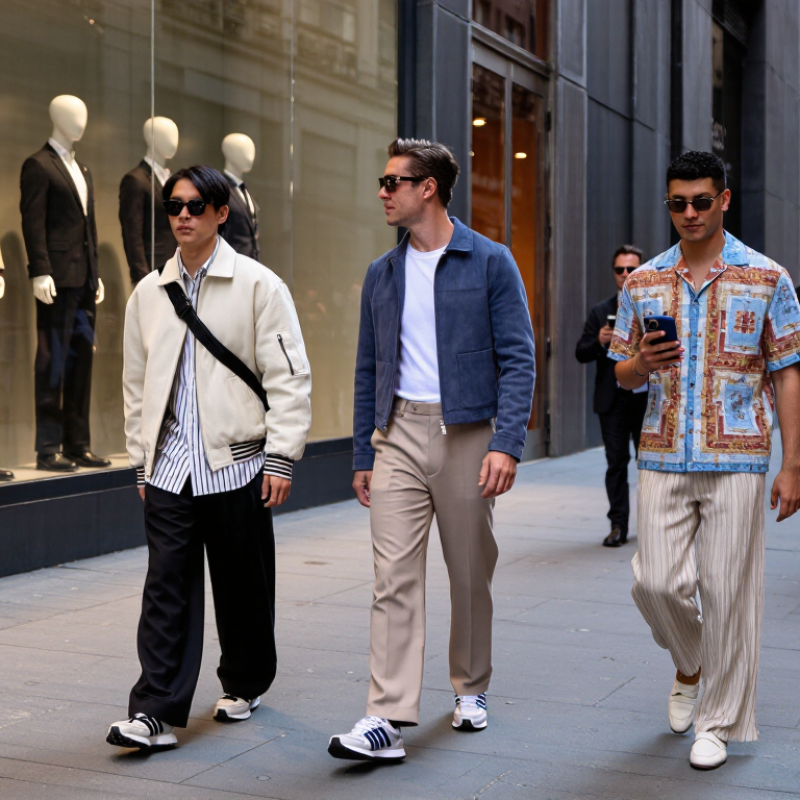
“Fast change” in men’s fashion can mean a visible shift in popular cuts, colors, or styling within a season or two. It does not mean every man replaces his wardrobe that quickly. A wider trouser leg, for example, may appear across street photos and shop windows before it becomes common in everyday offices.
Visibility is not adoption.
A useful measure is how quickly a look moves from niche styling into ordinary clothing, and how long it stays there. Look at repeated signals: trouser proportions, jacket length, fabric weight, and how people combine basics. One unusual outfit is not a trend. Several seasons of similar details offer stronger evidence.
Social media can make changes feel instant, but production, budgets, and personal taste slow real-world uptake. I may be overreading a few crowded shop windows; local habits differ. That is part of the definition, too. “Fast” depends on where, and for whom, you are looking.
Men’s fashion moves in cycles, not straight lines. The fitted suit once signaled respectability; later, roomy jackets and softer tailoring suggested ease. After wartime utility clothing, practical cuts remained familiar in everyday wardrobes. Youth culture then pushed denim, trainers, and loose silhouettes into wider use. Old shapes return, but their meaning changes with work, music, and public life.
Industry data helps explain why the pace feels faster. The Ellen MacArthur Foundation’s 2017 report, A New Textiles Economy, found that global clothing production doubled between 2000 and 2015, while garment use fell by 36 percent. That is broad apparel data, not a measurement of menswear alone, but it points to more frequent turnover. McKinsey and The Business of Fashion’s State of Fashion 2024 projected global fashion sales growth of 2 to 4 percent that year, showing an industry still competing for attention in a crowded market. The figures do not prove that men’s tastes changed faster; they show the commercial pressure around clothing.
A hemline or lapel rarely explains a cycle by itself. A relaxed trouser may echo an older cut, yet feel new beside today’s sneakers and workwear. I have noticed that historical explanations can sound too neat: people often keep wearing what fits, even after the trend has moved on. That lag matters. Style changes on the street more slowly than it does in a lookbook.
In 2026, men’s fashion changes quickly because ideas travel faster than wardrobes do. Social platforms put street style, runway details, and everyday outfits on the same screen. A wider trouser cut can move from a small local scene into office wear within months. It is not always a clean shift; older silhouettes often stay in rotation. That overlap matters.
Designers and retailers respond to changing tastes, but they also shape what people see as current. Fabric availability, production timelines, and price can influence which ideas reach stores. A lightweight jacket with roomy pockets may catch on because it looks fresh and works on a rainy commute. Practicality counts. Still, online visibility can make a trend seem bigger than it is. A crowded feed is not the same as a crowded street.
Economic pressure also changes buying habits. When budgets tighten, men may update one detail, such as a collar shape, rather than replace a whole wardrobe. Climate and work routines play a part too: warmer days encourage breathable layers, while flexible offices make relaxed tailoring easier to wear. These forces overlap, and their influence is hard to separate neatly. I may be giving practicality too much credit; sometimes a look spreads simply because it feels new, then loses appeal before anyone can explain why.
| Driving force | How it changes menswear | Common visible signals | Typical pace | Why it matters |
|---|---|---|---|---|
| Social media and creators | Images and styling ideas can reach large audiences quickly, making niche looks easier to discover and imitate. | Repeated outfit formulas, rapidly circulating styling terms, and sudden interest in particular silhouettes or accessories. | Days to weeks for visibility; adoption varies by audience. | Shortens the time between a look appearing and people responding to it. |
| Celebrity, music, film, and sport | Public appearances and screen wardrobes make particular garments, fits, or styling combinations more visible. | Audience interest following a major appearance, release, performance, or sporting moment. | Immediate attention; influence may last from a short spike to a longer revival. | Connects fashion to shared cultural moments rather than only to seasonal collections. |
| Runway and fashion media | Collections introduce design directions that editors, retailers, stylists, and consumers interpret in different ways. | Coverage of seasonal shows, recurring colors or proportions, and looks adapted for everyday wear. | Often seasonal, with influence building over weeks or months. | Provides a structured source of new ideas, while media coverage speeds their circulation. |
| Retail and product availability | What is stocked, promoted, discounted, or easy to find affects which trends consumers can actually try. | Similar cuts appearing across stores, shifts in display emphasis, and changing availability of key items. | Weeks to seasons, depending on production and inventory cycles. | Turns an abstract style idea into an accessible purchase option. |
| Street style and subcultures | Local communities develop distinctive ways to wear clothing; selected details can later spread beyond their original setting. | Distinctive layering, footwear choices, proportions, or ways of combining formal and casual clothing. | Can develop gradually, then spread quickly when widely documented. | Creates new looks from everyday experimentation, not just from designers or retailers. |
| Weather, work, and lifestyle shifts | Changes in climate, commuting, office norms, and leisure activities alter what feels practical and appropriate. | More adaptable layers, casual workwear, weather-ready pieces, or clothing suited to changing routines. | Immediate for practical needs; longer-term for lasting wardrobe habits. | Links trend adoption to comfort, function, and real changes in daily life. |
| Personal identity and gender expression | Evolving ideas about masculinity and self-expression broaden the ways men combine fit, color, accessories, and traditionally gendered styles. | More varied silhouettes, jewelry, color choices, and mixing of formal, casual, and expressive pieces. | Gradual cultural change, with visible shifts that may accelerate online. | Expands what consumers consider wearable and acceptable. |
| Resale, vintage, and archive revival | Secondhand markets make past styles easier to find, while renewed interest brings older shapes and details back into view. | Vintage-inspired fits, revived sportswear or workwear details, and increased interest in pre-owned clothing. | Revival cycles typically unfold over months or years, though online discovery can be faster. | Makes fashion cyclical: new trends often reinterpret existing styles rather than replace them entirely. |
Note: Timescales are indicative, not fixed measurements. A trend may move at different speeds across regions, age groups, and style communities.
Menswear can seem to change overnight because media makes new looks visible before most people have seen them in person. A short video can show the same wide-leg trousers styled on commuters, musicians, and office workers within minutes. Repetition makes a look feel familiar, then suddenly dated. That impression can be misleading. Many people keep wearing older clothes; online attention is not the same as what everyone wears.
Retailers speed up the cycle by watching searches, clicks, and sales. If relaxed jackets attract attention, stores may order more similar cuts and display them prominently. New arrivals, limited seasonal racks, and frequent product photos give shoppers reasons to check back. The physical details matter: a shorter hem or softer shoulder can make a familiar jacket appear new. Media supplies visibility; retail turns that visibility into something people can buy. The relationship is not perfectly predictable. A style may trend online but sit untouched on a local rack, and sales data rarely explains why. That part deserves more thought. When media favors quick novelty and stores respond with rapid turnover, men encounter more visual change, even when the underlying garments differ only slightly.
How media reach and retail speed can accelerate the spread of style trends
What this suggests: As social platforms reach more people, new menswear looks can be seen, copied, discussed, and reshared quickly. Online retail then makes it easier to browse and buy styles soon after they gain attention. This chart shows the growth of social media reach; it does not measure fashion trend cycles or prove that social media alone causes them.
Source: DataReportal, annual global social media user-identity estimates (January figures, 2015–2025). These are user identities, not necessarily unique individuals; estimates and historical figures may be revised.
Menswear trends often begin with a small detail: wider trousers, a shorter jacket, or a new way to roll a sleeve. Some catch on because they fit real routines. A roomy coat works on a cold commute; a sturdy overshirt handles changing weather. Comfort, usefulness, and easy styling help a trend stay in rotation.
Other looks fade when they rely mostly on novelty. A bold shape may feel exciting in a photo but awkward on a crowded bus. Online feeds also make styles appear and disappear quickly, though attention is not the same as lasting appeal. I’ve found that judging a trend too early can be misleading. Sometimes it needs time to feel natural. Sometimes it simply does not.
Tips: Before buying, try the look with clothes you already wear. Check the fit while sitting, walking, and reaching for a bag. Notice whether the fabric feels comfortable after a few hours. If only one outfit works, pause. A trend should suit your life, not just the mirror.
Styles move in cycles. Fitted suits, roomy jackets, denim, and loose silhouettes return in new settings. Their meaning changes with work, music, and daily life.
Global clothing production doubled from 2000 to 2015, while garment use fell by 36 percent. Those figures cover all clothing, not menswear alone. They suggest faster turnover, but do not prove men’s tastes changed faster.
Short videos can show wide-leg trousers on commuters, musicians, and office workers within minutes. Repeated images make a look feel familiar, then dated. Online attention is not the same as everyday wear.
Stores track searches, clicks, and sales. They may display more relaxed jackets when shoppers show interest. A softer shoulder or shorter hem can make a familiar garment feel new.
Useful clothes often stay in rotation. A roomy coat can help on a cold commute, while a sturdy overshirt handles changing weather. Comfort matters. Novelty alone may fade.
Try it with clothes you already wear. Sit, walk, and reach for a bag in the garment. Check how the fabric feels after a few hours.
People often keep wearing what fits after a trend has moved on. A lookbook changes quickly; everyday wardrobes may not. That delay is easy to overlook.
Maybe pause. If only one outfit works, the piece may not suit your routine. I could be overthinking it, but a mirror check alone can mislead.
This article explores why is men’s fashion changing so fast by first explaining what “fast change” means: visible shifts in silhouettes, colors, fabrics, and styling that happen more often than they once did. It places today’s changes in a longer history of recurring style cycles, showing how ideas are continually adapted rather than simply replaced. New trends can emerge from cultural shifts, changing lifestyles, technology, creative communities, and people’s desire to express identity.
Media and retail can speed up these changes by making new looks easier to discover, discuss, produce, and adopt. Yet not every trend lasts. Styles that fit everyday needs, feel versatile, or connect with broader values may become lasting parts of men’s wardrobes, while others fade when their novelty passes. Understanding these forces helps explain both the pace of change and the difference between a brief trend and a lasting shift.

CLStyle Fashion